
Why learning the language of your body can help with nervous system regulation
In this blog I want to clarify the definitions of 3 terms often used in body healing and trauma healing. As part of my Somatic Trauma work, it is important to understand the difference in meaning and function of these often-used terms.
Proprioception, Interoception, Neuroception
Let’s define them here and give an example of how the body uses these different capacities, before we get into more depth as to why increasing our understanding of our body’s language is a vital part of nervous system regulation.
In a nutshell:
Proprioception is our capacity to sense where our body is in space. It is an awareness of having a physical body, knowing its edges and its movement range without having to actually look at it.
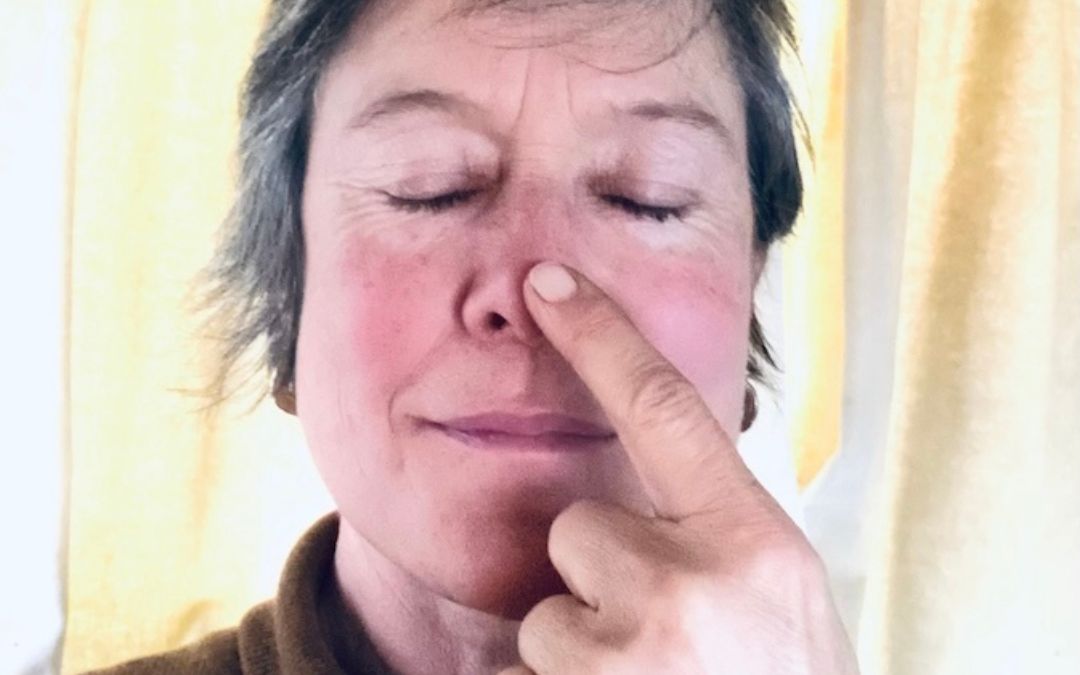
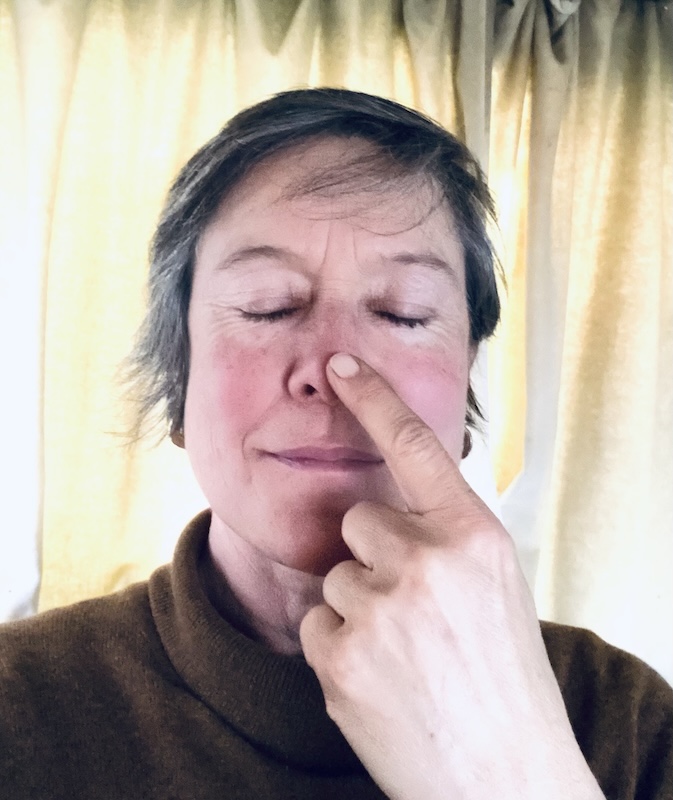
For example: being able to touch your nose with your finger whilst your eyes are closed. Try it now! You might find you can locate the centre of your nose more easily with one hand than with the other!
We use proprioception when we are training our body, when we want to enhance our coordination and motor skills.
Interoception is literally learning to read our body signals, becoming more fluent in the language of the inner body. Interoception lets us know that we are hungry, thirsty, tired, or communicates more subtle sensations like tingling, pulsing, heat, heaviness, lightness.
We develop a greater range of language around the different ‘felt-senses’ in the body, when we are working with trauma recovery in somatic healing practices. Becoming more curious about pure sensation ( separate from the emotions or thoughts or imagery) can be very helpful to anchoring us into the present moment and moving away from the pull of the trauma vortex.
Neuroception – explains how our body’s autonomic nervous system automatically detects safety or threat without involving conscious thought – like an early warning radar system.
We see it working effectively in the behaviour of herd animals. They are grazing quietly when suddenly, the presence of predators appear on the periphery of the herd. The information of this life threat ripples through the enteric or gut nervous systems of the antelope or deer – sending an unconscious message which propels the body into a survival response.
Becoming More Body Literate. How does this help in keeping us safe and well?
As a somatic trauma therapist, people often come and see me, because something is happening in their body that they find difficult or don’t understand. Perhaps they feel stuck or cut off from or in pain in a part of their body.
You may well implicitly recognise that your body is not separate from your thought process, spiritual beliefs, your felt or unexpressed emotions, nor is it immune to the effects of your daily habits or lifestyle.
My experience is that most of us want to understand and work more harmoniously with our own body – but don’t know how or where to start.
We begin by developing the body listening skills.
Our body tells us how he/she feels all the time.. It’s just that we often don’t have the bandwidth to appreciate or ‘hear’ it. A bit like not being able to hear bats or elephant calls at either end of the audio spectrum.
Somatic Practices help us to train our attention, to expand our awareness, to become more capable of appreciating these subtle inner prompts ( like learning to hear complexity within musical composition or appreciating the complex flavours of food. ) and more nuanced in our responses. It involves some basic education and a little daily practice to become more body-literate.
Once we can recognise what is going on, we are in a stronger position to choose how to respond to this information
Why is Proprioception important in nervous system regulation?
If we don’t know that we have a body, we won’t be able to respond to it.
Beginning by seeing, touching, naming our own body and our body parts. Here is my skin, I feel my skin. Here are my arms, I can touch my hands and feel how warm or boney they are. These practices help us to recognise that one has a physical body and where it starts and ends.
Why is interoception so important in nervous system regulation?
Developing interoception helps us to increase our range of language around what happens inside of our own bodies. Part of our healing process is building our capacity to sense what is going on inside our own body. This may help us make better decisions about “what does my body need right now?” . It helps us to develop more open curiosity – rather than reinforcing judgemental self-talk.
Focussing work practices tuning into what is called ‘the felt-sense’ By gently scanning the internal body to notice what is present. This technique offers us a neutral inquiry – without any expectation or judgement.
There may well be areas or zones of our body where we don’t sense anything or cannot name any sensation. It might feel blank or numb. This is still an experience. There may be other areas of the body that have very strong sensations and that feel very active.
In Somatic Experiencing work – we attend to these sensations, drop by drop ( tirating) and pendulating between a sensation that feels OK and one that has more charge. In this way we can still notice what our body is telling us, without getting overwhelmed by it. Often it is this simple noticing that allows a time and space for a discharge or release of a “charge” or experience that has been held or stuck in the body.
How does Neuroception help keep us safe?
Neuroscientist, Stephen Porges coined the phrase Neuroception in the 1990’s. The term is part of Polyvagal Theory. This theory aims to explain the nervous system’s ability to evaluate risk in the environment and inside the body, below the level of awareness.
It is what herd animals use – their enteric or gut nervous system communication. One minute you are happily grazing, in the next, the group herd information tells you there is a predator nearby and that you need to run. You may not have seen the predator but your autonomic nervous system has picked up unconscious signals from other herd members, and has given you a head start on running away from the source of danger.
It is connected to the healthy function and development of the famous well-documented vagus nerve ( and I will write more on this another day).
Porges sought to clarify and name the different states of autonomic nervous system responses. These states are not rigid boxes. We move up and down them all day. Perhaps it is best described as the Polyvagal “Ladder”
- Ventral vagal gives us choice and flexibility. It is a state when we are active and engaged with the life. For example, being excited about making plans with a friend, dancing, being absorbed in a hobby. In ventral vagal state, there is necessary sympathetic activation – our heart-rate is up and our body is capable of movement and our mind willing to be curious and interested in different things.
- Sympathetic Activation brings energy and action – it is vital in the survival response of standing up for ourselves or running from danger. It’s what gets us out of bed in the mornings! When stuck or mis-directed, this is what we can experience when agitated or distressed or upset.
- Dorsal vagal brings rest, withdrawal, or protection when overwhelmed. It is our body’s natural capacity for parasympathetic relaxation and our body’s natural defense capacity for freeze.
For example: Our ‘freeze state’ is essential if we have injured ourselves. Being in shock – gives the system time to bring essential energy and resources to the core body functions. Creatures use Dorsal vagal shut down to ‘play-dead’ and avoid getting eaten.
Difficulties arise when we society requires us to ‘over-ride this state or don’t give the animal body the opportunity to naturally emerge in its own time. Often the freeze response gets stuck in this phase when there is no present-moment risk.
“The job of the autonomic nervous system is to ensure we survive in moments of danger and thrive in times of safety… Without the capacity for activation, inhibition, and flexibility of response, we suffer.” Deb Dana
The indicator of a healthy autonomic nervous system is about flexibility of response. Trauma narrows the ladder. Healing widens it — increasing the ability to move between states without getting stuck.
Rather than asking or seeking “How do I get out of this state?” Polyvagal work asks:
“What does my nervous system need right now to feel even a little safer?”
Let’s remember – that nervous system regulation is not about controlling ourselves, it is about shifting the quality of attention and our moment to moment habits. Befriending our nervous systems and helping ourselves restore our capacity for connection.
How can I help myself to become more body literate and more nervous system savvy?
If you are interested to explore a dialogue with your body in a guided space…
I have created a community class ( online) for this very purpose. A Conversation with your Body is a weekly 45 minute group session. It is open to all my clients and members of the Embodying Resilience community. If you’d like to join, book here for a 10min orienting chat.
If you want to try more somatic resources for yourself – you can sign up to my mailing list and member’s video and audio library here
